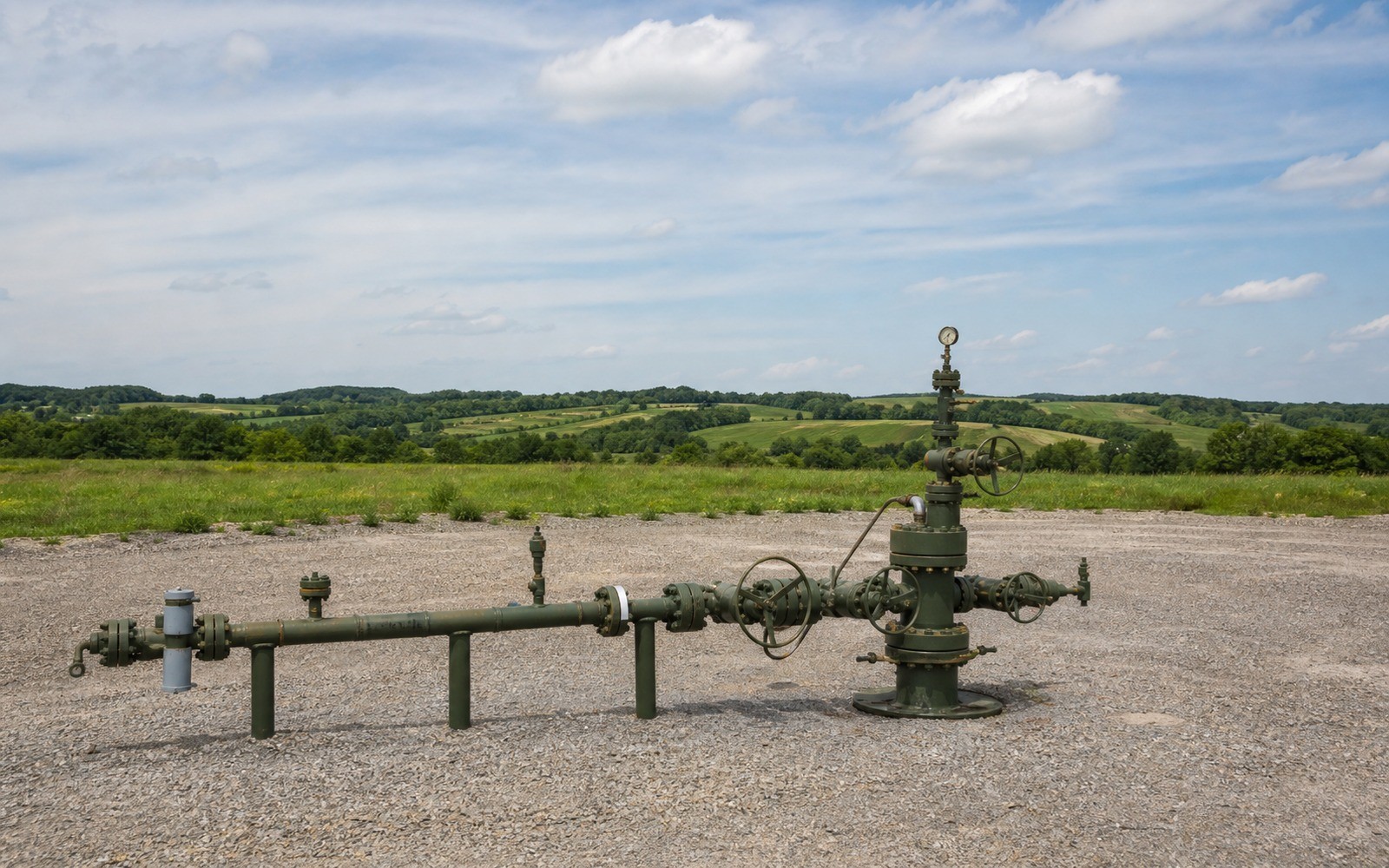
Marcellus is a dry gas play with some of the heaviest post-production deductions in the country. Any honest offer starts with your check stub, not a headline price.
Start with your check stub. We say that to every Marcellus owner before we talk about a number, because this basin has a reputation - deserved - for deducting more between the wellhead and your mailbox than almost any other gas play we've worked. Susquehanna, Bradford, Wyoming and Tioga County in northeast Pennsylvania, Washington and Greene County in the southwest, Wetzel and Marshall County across the West Virginia line - these are dry gas counties, meaning the gas coming up the wellbore is mostly methane with little to no liquids stripped off for extra revenue. That matters because dry gas producers lean harder on gathering, compression, dehydration and transportation deductions to make the economics work, and those line items show up on your division order whether your lease anticipated them or not.
We've bought Marcellus interests from owners who had no idea their lease lacked a market-enhancement clause until we pointed at the specific line on their check stub eating fifteen to twenty percent of gross value. That's not us talking you into anything - that's what the document says. Sell or don't sell, you should know what's actually being deducted before you decide either way.
Pennsylvania leases signed during the 2008-2012 land rush - especially the ones brokered fast, county by county, as operators like Chesapeake, Cabot (now Coterra), Range Resources and EQT raced to hold acreage - often carry post-production cost language that lets the operator net out gathering, compression, treating and interstate transport before calculating your royalty. West Virginia's statutory flat-rate leases, some dating back decades before shale drilling existed, create a different but equally real problem: royalty computed on old lease language never contemplated modern completions.
None of this means your royalty is being stolen. It usually means the lease was written to allow it, and Marcellus dry gas economics push operators to use every allowance the lease gives them. When we evaluate a Marcellus interest, we're reading the deduction line as carefully as the volume line, because two owners with identical gross production can have meaningfully different net checks depending on lease vintage.
A lot of Marcellus minerals trace back to Pennsylvania and West Virginia farms that split surface and mineral rights generations ago, sometimes through a will that never got probated properly, sometimes through an oil and gas lease signed in the 1980s for a shallow Devonian well that got folded into a modern Marcellus unit decades later. That creates fractional interests - an eighth here, a sixteenth there - spread across cousins who may not talk to each other, let alone agree on what to do with the minerals.
If you're one of several heirs holding a fractional interest and the rest of the family isn't interested in dealing with an operator's paperwork, that's a common enough situation that we have a straightforward process for it - buying your individual share doesn't require the whole family to agree to sell theirs.
Most Marcellus acreage is dry gas, but there's a wet gas window running through parts of southwest Pennsylvania and northern West Virginia - Washington, Greene, Wetzel and parts of Marshall County - where the produced gas carries enough natural gas liquids to add a separate revenue stream beyond the gas price itself. If your minerals sit in that window, your royalty math includes an NGL component that a straight dry-gas tract in Susquehanna County simply doesn't have, and that's worth accounting for separately rather than assuming every Marcellus check works the same way.
It also means two neighboring counties can have meaningfully different value even with comparable well performance, because one is selling straight methane at Appalachian basis and the other is selling gas plus a liquids stream priced against a different benchmark entirely.
We never quote a flat multiple over the phone before seeing your check stubs, because the deduction structure alone can shift value ten to twenty percent between two otherwise similar tracts. What we need: your most recent six months of check stubs, the deed or probate record showing your fractional interest, and whether the well is still in early production or has settled into its longer decline tail. Dry gas Marcellus wells decline more gradually than a Haynesville well, so a producing Marcellus interest often has a longer, steadier tail to value than a steeper-declining play.
West Virginia flat-rate leases sometimes require a separate legal step to convert to a market-based royalty before a sale makes full sense - that's something your CPA or an oil and gas attorney should weigh in on for your specific lease, not something the gas royalty desk will tell you to skip.
Dry gas plays like the Marcellus rely heavily on gathering, compression, dehydration and transportation to move methane to market, and many leases from the 2008-2012 land rush allow those costs to be netted out before your royalty is calculated. Whether that's fair depends entirely on your specific lease language.
Small fractional interests are common in this basin because Pennsylvania and West Virginia farms split mineral ownership across generations. A sixteenth or thirty-second interest can still have real value if it sits on a producing unit, and buying an individual heir's share doesn't require the rest of the family to participate.
Dry gas tracts, common across most of Pennsylvania, produce revenue from methane alone. Wet gas tracts in parts of Washington, Greene and Wetzel County produce an additional natural gas liquids stream, which typically adds value beyond what a comparable dry gas tract generates.
It can. Older flat-rate leases were written before modern shale completions existed and sometimes compute royalty differently than a market-based lease would. Talk to an oil and gas attorney about your specific lease terms before assuming your check reflects current production accurately.
Marcellus dry gas wells generally decline more gradually than a high-pressure play like the Haynesville, giving them a longer, steadier production tail. That longer tail is one factor in how we value a producing Marcellus interest.